Freelance Jobs

This is default featured post 1 title

Go to Blogger edit html and find these sentences.Now replace these sentences with your own descriptions.This theme is Bloggerized by Lasantha Bandara - Premiumbloggertemplates.com.

This is default featured post 2 title

Go to Blogger edit html and find these sentences.Now replace these sentences with your own descriptions.This theme is Bloggerized by Lasantha Bandara - Premiumbloggertemplates.com.

This is default featured post 3 title

Go to Blogger edit html and find these sentences.Now replace these sentences with your own descriptions.This theme is Bloggerized by Lasantha Bandara - Premiumbloggertemplates.com.

This is default featured post 4 title

Go to Blogger edit html and find these sentences.Now replace these sentences with your own descriptions.This theme is Bloggerized by Lasantha Bandara - Premiumbloggertemplates.com.

This is default featured post 5 title

Go to Blogger edit html and find these sentences.Now replace these sentences with your own descriptions.This theme is Bloggerized by Lasantha Bandara - Premiumbloggertemplates.com.

Tuesday, March 16, 2010

Another Dead on Manny Pacquiao's Game

A village councilor in South Cotabato died of a heart attack after watching boxing icon
Manny Pacquiao win over Joshua Clottey in their bout on Sunday.

Leopoldo Salcedo, 50, a councilor of San Jose village in Banga town in South Cotabato, suffered an attack while cheering for the Filipino boxing icon, Radio dzRH reported on Monday.

Moments earlier, Salcedo saw Pacquiao being declared the winner of the bout via unanimous decision.

Banga town police director Inspector Dennis Madriaga cited initial testimonies from witnesses who said Salcedo collapsed during the celebration.

Salcedo was rushed to a nearby hospital but was declared dead on arrival.
David Mikael Taclino
Inyu Web Development and Design
Creative Writer

Filipino Family May Be Deported for Joining Strike


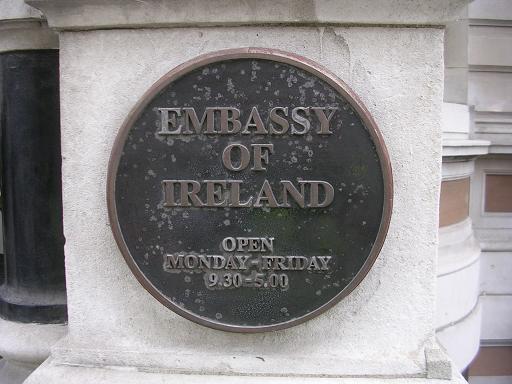
A Filipino worker, his wife, and their three children face deportation from Ireland after the government confiscated their immigration visas following his participation in a hunger strike over a compensation issue with his employer, it was learned Sunday.
Citing a report from Republican Sinn Fein’s website, Migrante International said the immigration cards of John Recto, who has been living and working in Ireland for the past eight years, and his wife had been confiscated soon after the labor dispute at the Green Isle Foods factory in Naas, Co Kildare was resolved.
Recto was among the three workers of the frozen food factory who went on hunger strike after being fired last summer. The two others were Jim Wyse, shop steward at the plant, and former Offaly footballer John Guinan. The three, together with other Technical Engineering and Electrical Union (TEEU) workers, amicably settled with the help of local unions.
“According to reports, John Recto, together with his wife and kids, are being threatened of a possible deportation from Ireland upon the confiscation of their immigrant visas by Irish authorities. We are concerned that this is another case where a worker is punished for fighting for his rights,” said Migrante International head Garry Martinez.
“We believe that the confiscation of the immigrant visas of Recto and his wife was discriminatory and was meant to punish Recto for joining the strike. This was meant to be a signal to all migrant workers to be silent or else. This is a clear violation of labor and human rights of John and his innocent family,” he added.
In a news release, Migrante said the Irish Congress of Trade Unions and the TEEU are now making representations on behalf of Recto and his family to stop their deportation.
Recto’s family joined him in Ireland from the Philippines five years ago. His two oldest children grew up in Ireland and his youngest child was born there.
“We call on the Department of Foreign Affairs to immediately assist the Recto family and exert all diplomatic means possible to stop the deportation process. We would like to remind the Philippine government that it has ratified the International Convention on the Rights of Migrants and their Families, which is clearly being violated in the case of the Recto family,” Martinez said.
Migrante asserted that even if Ireland is not a signatory of the convention, the Philippine post can still invoke the right of the Recto family for a due process under the laws existing in Ireland.
“We are grateful that Irish trade unions are now taking up the cudgels to protect John and his family. It is incumbent upon the Arroyo administration to do its share in assisting the Recto family on the injustice being perpetrated against them,” Martinez added.
The group plans to take the issue of the Recto family to the Irish government and international bodies related to the protection of migrant rights.

David Mikael Taclino
Inyu Web Development and Design
Creative Writer

Caticlan Airport, San Miguel Next Project

 San Miguel Corp. has gained a foothold into a pioneering airport development business by taking a majority stake in the modernization of the Caticlan airport, the gateway to the country’s world-famous beach spot Boracay Island.
Inquirer sources said San Miguel had agreed to come in as a strategic partner of the consortium led by Chinese-Filipino businessman George Yang that bagged the right to modernize the Caticlan airport under a 25-year concession arrangement with the government.
San Miguel is expected to sign an agreement to buy a 51-percent interest in Yang-led Caticlan International Airport Development Corp. (CIADC) anytime this week, a source familiar with the matter told the Inquirer. The conglomerate was invited to participate in the much-awaited project by Yang himself and the partnership deal had been in the works for many months now.
CIADC’s Caticlan project is touted as the first ever privatization of an airport terminal in the Philippines. At the same time, it is in line with San Miguel’s diversification into the infrastructure business and recent foray into leisure estate development in Boracay.
The modernization of the Caticlan airport alone is worth around P2.5 billion, based on the framework approved by the National Economic and Development Authority. But the project also has a commercial component that entails the development of a 16-hectare property beside the airport. This peripheral project is estimated to cost P10 billion.
The upgrading involves the construction of a bigger airport passenger terminal, extension of the existing runway from 950 meters to 2,100 meters to accommodate bigger aircraft, improvement of the road network, and upgrading of airport facilities and air traffic control aids. The proponents have also committed to build other support utilities, install fire-fighting equipment and construct a diversion road.
The project is based on a build-rehabilitate-operate-transfer agreement. CIADC has up to seven years to build and expand the airport and 25 years to operate the facilities. All revenues will go to CIADC except for earnings from the operation and maintenance of navigation systems, which would go to the Department of Transportation and Communication.
The modernization work on the Caticlan airport started last January. Once finished, CIADC expects fares to be more competitive for passengers since airlines can use aircraft with more seating capacity than the turbo-propellers that are mostly being used today. A modernized Caticlan airport is also targeted to serve as an international gateway not only to Boracay but also to the rest of the Visayas.
Yang, who holds the master franchise for American fast-food giant McDonald’s in the Philippines, also has some real estate investments in Boracay.
San Miguel, through its property arm San Miguel Properties Inc., is also breaking into Boracay’s booming tourism after recently acquiring a 28-hectare property targeted for leisure development.
SMPI’s Boracay property is adjacent to the plush Shangri-La hotel and is now being planned for development into a residential condominium complex.


David Mikael Taclino
Inyu Web Development and Design
Creative Writer

Former Budget Secretary Boncodin Died In Cardiac Arrest

She spent most of her life in government but she never craved money or power, lived simply and left public service untouched by any whiff of scandal.
At 2:05 p.m. Monday, former Budget Secretary Emilia T. Boncodin passed away due to cardiac arrest at a Quezon City hospital after her body rejected a kidney donated by her sister. She was 55.
Boncodin died after repeated attempts to revive her failed, according to a medical bulletin issued by Dr. Enrique Ona, executive director of the National Kidney and Transplant Institute (NKTI).
“We tried to resuscitate her for more than two hours, but unfortunately this had to happen,” Ona told reporters.
The medical bulletin said: “She was admitted on March 10 for difficulty of breathing and anemia and was diagnosed to be at End Stage Renal Disease after her kidney transplant done on Feb. 3, 2005 went into chronic rejection and [the kidney] completely failed to function.”
Boncodin and nine other Cabinet and high government officials—later called the “Hyatt 10”—quit the administration on July 8, 2005, over the “Hello Garci” scandal and called for the resignation of President Gloria Macapagal-Arroyo.
The resignations sparked the most dangerous political crisis to confront Ms Arroyo and brought her administration to the precipice.
No fancy stuff for her
Throughout her decades-long stint in government, most of it in the Department of Budget and Management, Boncodin was known for her integrity and for the “integrity of her work,” colleagues said.
“She entered government at the age of 18. She knew the numbers like the back of her hand. She would remain honest. The decades that she served her country were untarnished by scandal or dishonesty,” former presidential adviser on the peace process Teresita “Ging” Deles said by phone.
As a member of the Arroyo Cabinet, a car was made available for her use but Boncodin chose to live in a place nearer MalacaƱang, rather than go home every day to the family residence in Novaliches, Quezon City, according to Deles.
“She didn’t have a fancy car. And she and her small family lived simply in a house that they built,” Deles said.
“She didn’t like any fancy stuff. She lived within her means. I don’t know anybody else who reached the rank of Cabinet secretary who lived as simply as she did.”
For love of country
Boncodin, who taught at the University of the Philippines National College of Public Administration and Governance (NCPAG), lived with her mother, who owns a store on the UP campus, and a sister in a small subdivision in Novaliches, according to Deles.
‘It was never about prestige, about compensation. She loved her work. She did it in the service of the country,” she added.
Boncodin was present when the “Hyatt 10” last year marked the fourth anniversary of their resignation from the Cabinet by hearing Mass near MalacaƱang. The group issued a statement warning of what they saw as Ms Arroyo’s attempt to perpetuate herself in power.
The others who marked that anniversary were Deles, former Cabinet officials Florencio Abad, Imelda Nicolas, Cesar Purisima, Corazon Soliman and Rene Villa.
After the Mass, they tried marching from the church to MalacaƱang to deliver their statement to Ms Arroyo, but decided against it after they were stopped at the guards’ post. They left copies with the presidential guards.
Love and passion
After leaving government, some of the resigned Cabinet officials, including Boncodin, founded the NGO International Center on Innovation, Transformation and Excellence in Governance. They also joined the group, called Former Senior Government Officials, which issues commentaries on government policies and programs.
In the past few months, Boncodin had been working on a project designed to build the capacity of civil society “to monitor” the budget, while continuing to teach at NCPAG, according to Deles.
“She was deep in work in governance. And she continued to teach, which was her love and passion,” said Deles, who met with Boncodin two weeks ago to talk about the project deadlines.
She was known as a hardworking technocrat with expertise in public finance, budgeting, financial management, public administration, civil service and economic development.
Ona was one of three doctors who attended to Boncodin in her last moments. The others were Doctors Zenaida Antonio and Michael Jaro.
One effect of the kidney rejection was the inability of the body to flush out toxic products.
A perfect match
Boncodin underwent a kidney transplant taking a kidney from her younger sister, Adelina, on Feb. 3, 2005.
Ona said Boncodin suffered from polycystic kidney, which meant that her kidneys had congenital cysts, leading to their malfunction.
“It is unfortunate that this had to happen. After her term as budget secretary, she took on several consultancy jobs that led her to as far as Afghanistan. On several occasions, she would run out of medicines that would prevent the rejection of the donated kidney,” Ona said.
The medication, called immunosuppressive medicine, would have helped the body accept the donated kidney.
The NKTI executive director said Boncodin and her sister-donor were “a perfect match.”
Last moments
Ona said doctors had been preparing Boncodin for dialysis when she suddenly went into cardiac arrest.
“When she was admitted four days ago, she was already weak and became anemic. We also gave her several units of blood because of her anemia,” he said.
Ona said regular dialysis was one of the options to treat Boncodin, the other being another kidney transplant.
“Only three days ago and Monday, I discussed with her the option of another transplant, either from a non-related donor or a deceased donor,” he said.
Ona described Boncodin as “hopeful” whenever he talked to her. He said Boncodin’s sister and mother Cristeta were with her in her last moments.
The family’s spokesperson, Nieves Osorio, said Boncodin’s remains were to be brought to the Della Strada Parish Church in Quezon City for the wake that was to begin Monday night.
Osorio said the family would announce the details of the interment after consultations among its members.
In lieu of flowers, the Boncodin family requested that donations be made to a bank account to be announced later, Osorio said.
Last talk
Osorio described Boncodin—who was from Iriga City, Camarines Sur, and who never married “because she was engrossed with her work”—as her friend of more than 30 years.
The last time they talked was on Thursday, she said.
“We talked about the things we would do… like she firmly believed in improving public financial management as a member of the private sector,” Osorio said.
She said she was scheduled to see Boncodin Monday afternoon but was told by the doctors that she had died.
Boncodin obtained her business degree from UP and her master’s degree in Public Administration, as an Edward S. Mason Fellow, from the Kennedy School of Government, Harvard University, in 1986.
MalacaƱang mourned Boncodin’s death.
Deputy presidential spokesperson Gary Olivar said Ms Arroyo would pay her last respects to Boncodin “once details of the wake are made known.”David Mikael Taclino
Inyu Web Development and Design
Creative Writer

Japanese Cartoonist Opposed Restriction Over Child Sex Image

 A group of Japanese cartoonists on Monday protested against a Tokyo government plan to tighten rules on sexual images of minors in comics, animation and computer game software.
Cartoonists, including prominent artists Machiko Satonaka and Tetsuya Chiba, held a news conference to voice their opposition to the plan before the Tokyo metropolitan assembly votes on the proposal on Friday.
"This could violate freedom of expression," they said in a joint statement to assembly members of the ruling Democratic Party of Japan.
Japan's capital has proposed to call on publishers to exercise greater restraint on sales of any cartoon works that feature sexual depictions of characters that people would assume to be underage.
The local government ordinance, which would be effective only in the capital, would also designate any comics showing sexual violence as "noxious publications" and tighten restrictions for under-aged readers.
Japan is a major global source of child pornography. Although producing and distributing it is illegal, possession is not criminalized, and images of "non-existent" underage characters in manga comics are legal.
The Japanese central government has separately launched a working team, made up of police, education, justice and other senior officials, to tighten measures against child pornography.
The body has been tasked with drawing up new measures by June, which could include a crackdown on online child porn and the blocking of sites, public education campaigns, and steps to find and help the victims.
David Mikael Taclino
Inyu Web Development and Design
Creative Writer

Share

Twitter Delicious Facebook Digg Stumbleupon Favorites More