


What is it about islands that makes them so intriguing? Whether it's a tropical speck in the midst of a vast ocean, or a tree-shrouded hummock in the river of a great city, it's still somehow set apart, unique, proud, lonely, even mysterious. The waters around it ineffably define it, in a way that no plot of mainland can be defined. And because effort is required to get there — whether it's simply driving across a bridge or chartering a private plane — once you've reached its shores, you know you're somewhere different.
Our new book 500 Extraordinary Islands began to take shape as a sort of life list — how many islands have you been to, and which have you always dreamed of seeing? As our final list evolved — 500 is a lot of islands, but there were thousands of others we might have included — we found ourselves broadening the definition, expanding our concept of what makes an island alluring. But our main criterion was simple: We wanted to offer the 500 islands you'd most want to visit — or perhaps stay on forever. Here are 10 of the most interesting.
Usedom: The Singing Island
Germany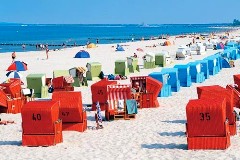 Though anchored to the German coast with bridges at both north and
south ends (and a railway over the northern bridge), Usedom lies so far
east that the eastern tip is actually part of Poland — you can walk down
the beach from Ahlberg to the large commercial port of Swinoujscie. But
it's the German side that's the tourist magnet, a beloved getaway since
the early 19th century; Usedom has been nicknamed the "Bathtub of Berlin."
Usedom's other nickname, "the singing island," came about because the
white sand of its 25-mile strand is so fine that it squeaks when you
walk on it. A handful of nearby "wellness hotels" and thermal baths
preserve old-world spa traditions. Landscaped garden promenades,
open-air concert pavilions, and tree-lined side streets hark back to
genteel seaside holiday traditions; each resort town also has a long
pleasure pier extending into the Baltic, where you can still envision a
parade of ladies with parasols and bustled dresses and gents in well-cut
linen suits.
Though anchored to the German coast with bridges at both north and
south ends (and a railway over the northern bridge), Usedom lies so far
east that the eastern tip is actually part of Poland — you can walk down
the beach from Ahlberg to the large commercial port of Swinoujscie. But
it's the German side that's the tourist magnet, a beloved getaway since
the early 19th century; Usedom has been nicknamed the "Bathtub of Berlin."
Usedom's other nickname, "the singing island," came about because the
white sand of its 25-mile strand is so fine that it squeaks when you
walk on it. A handful of nearby "wellness hotels" and thermal baths
preserve old-world spa traditions. Landscaped garden promenades,
open-air concert pavilions, and tree-lined side streets hark back to
genteel seaside holiday traditions; each resort town also has a long
pleasure pier extending into the Baltic, where you can still envision a
parade of ladies with parasols and bustled dresses and gents in well-cut
linen suits.Bora Bora: Romantic Heaven on Earth
French Polynesia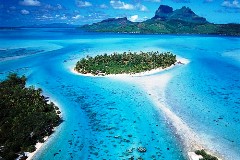 Nothing says "ultimate honeymoon" quite like Bora
Bora. The word is out — and has been for some time — about this
French Polynesian island's extraordinary natural beauty, and Bora Bora's
remoteness and high prices have kept the island's luxurious mystique
intact. Enchanting Bora Bora belongs to the exclusive,
"so-preposterously-gorgeous-it-doesn't-seem-natural" club of travel
destinations. Even the most jaded globe-trotter duly drops his jaw when
confronted with the spectacle of the lagoon and the iconic silhouette of
Mount Otemanu in the background. Many visitors, in fact, never get
farther than that perfect tableau of paradise, but excursions to the
main island and its lofty interior are how you'll get to the real heart
of Bora Bora.
Nothing says "ultimate honeymoon" quite like Bora
Bora. The word is out — and has been for some time — about this
French Polynesian island's extraordinary natural beauty, and Bora Bora's
remoteness and high prices have kept the island's luxurious mystique
intact. Enchanting Bora Bora belongs to the exclusive,
"so-preposterously-gorgeous-it-doesn't-seem-natural" club of travel
destinations. Even the most jaded globe-trotter duly drops his jaw when
confronted with the spectacle of the lagoon and the iconic silhouette of
Mount Otemanu in the background. Many visitors, in fact, never get
farther than that perfect tableau of paradise, but excursions to the
main island and its lofty interior are how you'll get to the real heart
of Bora Bora.Prince Edward Island: Beyond Green Gables
Canada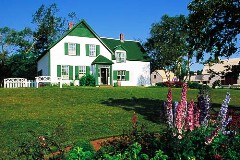 Sometimes all the Anne of Green Gables hoopla around Prince Edward
Island gets to be a bit much. How can a century-old series of children's
books define an entire Canadian province? Drive around PEI's low
rolling hills blanketed in trees and crops, and that bucolic past
celebrated in Lucy Maud Montgomery's books makes sense after all. Beyond
the jagged coast with its inlets and historic fishing villages, you'll
discover that small farms make up the island's backbone. You can get in
touch with the island's Acadian heritage at the five Rusticos: the
coastal villages of North Rustico, South Rustico, Rusticoville, Rustico
Harbour, and Anglo Rustico. This inevitably brings you to Cavendish,
the vortex of Anne of Green Gables country. You can see the farmstead
that started it all, Green Gables, a solid white mid-19th-century
farmhouse with green shutters (and, naturally, green gable points) that
belonged to cousins of author Montgomery.
Sometimes all the Anne of Green Gables hoopla around Prince Edward
Island gets to be a bit much. How can a century-old series of children's
books define an entire Canadian province? Drive around PEI's low
rolling hills blanketed in trees and crops, and that bucolic past
celebrated in Lucy Maud Montgomery's books makes sense after all. Beyond
the jagged coast with its inlets and historic fishing villages, you'll
discover that small farms make up the island's backbone. You can get in
touch with the island's Acadian heritage at the five Rusticos: the
coastal villages of North Rustico, South Rustico, Rusticoville, Rustico
Harbour, and Anglo Rustico. This inevitably brings you to Cavendish,
the vortex of Anne of Green Gables country. You can see the farmstead
that started it all, Green Gables, a solid white mid-19th-century
farmhouse with green shutters (and, naturally, green gable points) that
belonged to cousins of author Montgomery.Gorgona: Welcome to the Jungle
Colombia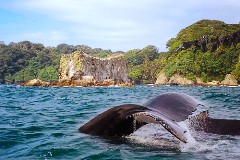 It hasn't taken long for nature to regain complete control of Gorgona
Island. From the 1950s to the 1980s, this landmass in the Pacific was a
maximum security prison — Colombia's Alcatraz — but the facility was
closed and declared a natural national park in 1985; the jail buildings
are now overgrown with dense vegetation, complete with monkeys swinging
from vine to vine. Gorgona is one of those places where the natural
environment is almost comically inhospitable to humans. Visitors who
come ashore at Gorgona today are strictly supervised, limited to groups
of 80 at a time, and forbidden from wandering too far away from the
coastline, for fear of encountering deadly critters. Gorgona shelters a
wealth of endemic plant and animal species in its rainforests, including
the small (and endangered) blue lizard of Gorgona. Gorgona also has
some of the finest sandy beaches in Colombia, backed by palm trees and a
thick curtain of green, letting you know that the creepy-crawly jungle
is never far away on this island.
It hasn't taken long for nature to regain complete control of Gorgona
Island. From the 1950s to the 1980s, this landmass in the Pacific was a
maximum security prison — Colombia's Alcatraz — but the facility was
closed and declared a natural national park in 1985; the jail buildings
are now overgrown with dense vegetation, complete with monkeys swinging
from vine to vine. Gorgona is one of those places where the natural
environment is almost comically inhospitable to humans. Visitors who
come ashore at Gorgona today are strictly supervised, limited to groups
of 80 at a time, and forbidden from wandering too far away from the
coastline, for fear of encountering deadly critters. Gorgona shelters a
wealth of endemic plant and animal species in its rainforests, including
the small (and endangered) blue lizard of Gorgona. Gorgona also has
some of the finest sandy beaches in Colombia, backed by palm trees and a
thick curtain of green, letting you know that the creepy-crawly jungle
is never far away on this island.Malta: Crossroads of the Mediterranean
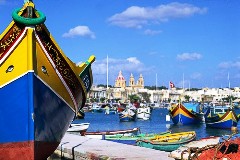 Walking the streets of most any Maltese town, you get the vague sense
that you're in some kind of greatest hits of European architecture — a
little London
here, echoes of Paris
there, maybe a touch of Rome
in that baroque church facade. And it's no wonder: the Phoenicians, the
Carthaginians, the Romans, the knights of St. John, the French, and the
British all swept in from their respective compass points and left
indelible reminders of their conquests. Malta today is a modern and
well-run island nation, with its illustrious laurels of history on full
view. The walled city of Mdina,
on Malta proper, is superbly evocative of the island's medieval era.
Descendants of the noble families — Norman, Sicilian, and Spanish — that
ruled Malta centuries ago still inhabit the patrician palaces that line
the shady streets here. In summer, the coastal resort towns of Sliema
and St. Julian's, just outside Valletta,
come alive with holidaymakers and yacht-setters, and the cafe-filled
promenades fronting the teal sea are the epitome of the Mediterranean
good life.
Walking the streets of most any Maltese town, you get the vague sense
that you're in some kind of greatest hits of European architecture — a
little London
here, echoes of Paris
there, maybe a touch of Rome
in that baroque church facade. And it's no wonder: the Phoenicians, the
Carthaginians, the Romans, the knights of St. John, the French, and the
British all swept in from their respective compass points and left
indelible reminders of their conquests. Malta today is a modern and
well-run island nation, with its illustrious laurels of history on full
view. The walled city of Mdina,
on Malta proper, is superbly evocative of the island's medieval era.
Descendants of the noble families — Norman, Sicilian, and Spanish — that
ruled Malta centuries ago still inhabit the patrician palaces that line
the shady streets here. In summer, the coastal resort towns of Sliema
and St. Julian's, just outside Valletta,
come alive with holidaymakers and yacht-setters, and the cafe-filled
promenades fronting the teal sea are the epitome of the Mediterranean
good life.Lamu: Exotic Enclave
Kenya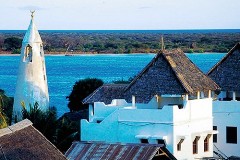
Just 2 degrees south of the Equator, off the east coast of Kenya, Lamu is a place that seems stuck in time. For centuries, it was a bustling Indian Ocean port of call and an important link in the spice trade; that atmosphere is totally palpable here today. Lamu is like an exotic stage set that also happens to have amazing beaches. The streets of Lamu are quiet, cool, and car-free, lined with thick-walled white stone buildings, their arches and decorative cutouts evoking the centuries of Muslim influence here; Lamu was founded by Arab traders in the 1400s. The entire island has one proper town — the busy Lamu Town, which, as the oldest and best-preserved Swahili settlement in East Africa, is a UNESCO World Heritage Site. Monuments here include the turreted Lamu Fort and Riyadha Mosque (both from the 19th Century), but the most interesting sights are the much more ancient, nameless traditional houses, some of which date back to Lamu Town's 14th-century
Isla Grande de Tierra del Fuego: El Fin del Mundo
Argentina and Chile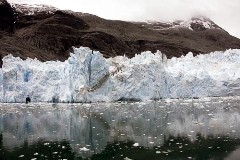 Several centuries ago, the only inhabitants of the southern extremity
of South America were the native Yahgan Indians. To survive in the
inhospitable climate of this land, the Yahgans made ample use of fire.
The campfires continuously burning here were so numerous and so bright
that when the first Europeans to explore the region saw them from the
sea, they called the whole place Tierra del Fuego ("Land of Fire").
Today, the name Tierra del Fuego applies to the group of islands that
make up the southern tips of both Argentina and Chile. Isla Grande — as
its name suggests — is the largest landmass in the archipelago, with
territories belonging to both those countries. Not far from Isla Grande,
though it's actually a separate small island in the Tierra del Fuego
group, is the real southernmost tip of South America and one of the most
fabled sites in the story of seafaring: Cape Horn. Before the opening
of the Panama Canal in 1914, rounding "the Horn" was the only way for
ships to get between the Atlantic and the Pacific Oceans, and its
hostile waters were — and still are — notorious for the challenges they
posed to sailors. Strong winds and currents, enormous waves, and even
icebergs sent many a seaman to his watery grave.
Several centuries ago, the only inhabitants of the southern extremity
of South America were the native Yahgan Indians. To survive in the
inhospitable climate of this land, the Yahgans made ample use of fire.
The campfires continuously burning here were so numerous and so bright
that when the first Europeans to explore the region saw them from the
sea, they called the whole place Tierra del Fuego ("Land of Fire").
Today, the name Tierra del Fuego applies to the group of islands that
make up the southern tips of both Argentina and Chile. Isla Grande — as
its name suggests — is the largest landmass in the archipelago, with
territories belonging to both those countries. Not far from Isla Grande,
though it's actually a separate small island in the Tierra del Fuego
group, is the real southernmost tip of South America and one of the most
fabled sites in the story of seafaring: Cape Horn. Before the opening
of the Panama Canal in 1914, rounding "the Horn" was the only way for
ships to get between the Atlantic and the Pacific Oceans, and its
hostile waters were — and still are — notorious for the challenges they
posed to sailors. Strong winds and currents, enormous waves, and even
icebergs sent many a seaman to his watery grave.Isle of Wight: Victoriana by the Sea
Channel Islands, U.K.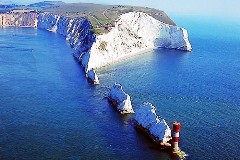 In 1845, young Queen Victoria made this Channel Island all the rage
when she began coming here for seaside holidays with her beloved consort
Prince Albert; you can still tour their Italianate mansion, Osbourne
House. Following the queen's example, 19th-century celebrities from
Tennyson to Charles Dickens flocked here to enjoy Wight's mild climate,
sandy beaches, and panoramic walks over dramatic chalk downs. Amid the
prim Victoriana, imagine the impact of 600,000 rock fans arriving in
1970 for the third annual Isle of Wight Rock Festival, where, among
other acts, Jimi Hendrix blew fans' minds. Revived in 2002, that
festival books many of the U.K.'s top acts for a long weekend in June;
the festival includes a huge campground where many concert-goers hang
out for three days, rain or shine. Even Queen Victoria might have been
amused.
In 1845, young Queen Victoria made this Channel Island all the rage
when she began coming here for seaside holidays with her beloved consort
Prince Albert; you can still tour their Italianate mansion, Osbourne
House. Following the queen's example, 19th-century celebrities from
Tennyson to Charles Dickens flocked here to enjoy Wight's mild climate,
sandy beaches, and panoramic walks over dramatic chalk downs. Amid the
prim Victoriana, imagine the impact of 600,000 rock fans arriving in
1970 for the third annual Isle of Wight Rock Festival, where, among
other acts, Jimi Hendrix blew fans' minds. Revived in 2002, that
festival books many of the U.K.'s top acts for a long weekend in June;
the festival includes a huge campground where many concert-goers hang
out for three days, rain or shine. Even Queen Victoria might have been
amused.Mauritius: Sophisticated Paradise
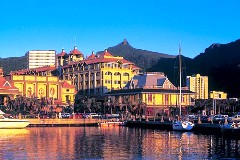 Isolated in the Indian Ocean, 1,243 miles east of mainland Africa,
Mauritius may be tiny, but there's never a shortage of things to do.
With a coastline ringed by coral reefs, and calm, clear, shallow lagoon
waters, the island is ideal for all sorts of water sports; the unspoiled
interior offers sights of spectacular natural beauty as well. Tourism
on Mauritius is a relatively new phenomenon, however, and so far it's
definitely geared toward the higher-end traveler. Mauritius today is an
amalgam of Creole, Indian, Chinese, and French peoples (there was never
an indigenous population), with Creole and French the dominant flavors.
Its most famous resident, however, may have been the flightless dodo
bird, a rare species discovered here by the first Dutch visitors and
soon driven to extinction by the settlers' wild pigs and macaques.
Isolated in the Indian Ocean, 1,243 miles east of mainland Africa,
Mauritius may be tiny, but there's never a shortage of things to do.
With a coastline ringed by coral reefs, and calm, clear, shallow lagoon
waters, the island is ideal for all sorts of water sports; the unspoiled
interior offers sights of spectacular natural beauty as well. Tourism
on Mauritius is a relatively new phenomenon, however, and so far it's
definitely geared toward the higher-end traveler. Mauritius today is an
amalgam of Creole, Indian, Chinese, and French peoples (there was never
an indigenous population), with Creole and French the dominant flavors.
Its most famous resident, however, may have been the flightless dodo
bird, a rare species discovered here by the first Dutch visitors and
soon driven to extinction by the settlers' wild pigs and macaques.Ile Sainte-Hélène & Ile Notre-Dame: Beaucoup Recreation
Montreal, Canada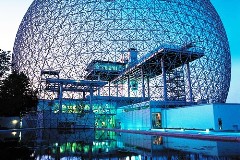 Montreal's
richest repositories of recreational opportunities are its two
playground islands in the middle of the St. Lawrence River, Ile
Sainte-Hélène and Ile Notre-Dame. Developed for Montreal's Expo 67, they
remain prime destinations for the 21st century. Ile Sainte-Hélène has
long been a fixture in Montreal's history. Following the War of 1812,
defenses such as a fort, a powder house, and a blockhouse were built
here to protect the city. The island was converted into parkland in
1874, but Ile Sainte-Hélène returned to military duty in World War II.
Conversely, Ile Notre-Dame was built entirely from scratch, using 15
million tons of rocks excavated for tunnels for the Montreal Metro in
1965. The La Ronde Amusement park was built on Sainte-Hélène for the
exposition; operated today by Six Flags, it offers world-class roller
coasters and thrill rides. Most of the Expo 67 pavilions were dismantled
in the years following the fair; the pavilions of France and Quebec
became Ile Notre-Dame's Montreal Casino and the American pavilion became
Ile St. Helene's Biosphere attraction, which has exhibits on
environmental issues.
Montreal's
richest repositories of recreational opportunities are its two
playground islands in the middle of the St. Lawrence River, Ile
Sainte-Hélène and Ile Notre-Dame. Developed for Montreal's Expo 67, they
remain prime destinations for the 21st century. Ile Sainte-Hélène has
long been a fixture in Montreal's history. Following the War of 1812,
defenses such as a fort, a powder house, and a blockhouse were built
here to protect the city. The island was converted into parkland in
1874, but Ile Sainte-Hélène returned to military duty in World War II.
Conversely, Ile Notre-Dame was built entirely from scratch, using 15
million tons of rocks excavated for tunnels for the Montreal Metro in
1965. The La Ronde Amusement park was built on Sainte-Hélène for the
exposition; operated today by Six Flags, it offers world-class roller
coasters and thrill rides. Most of the Expo 67 pavilions were dismantled
in the years following the fair; the pavilions of France and Quebec
became Ile Notre-Dame's Montreal Casino and the American pavilion became
Ile St. Helene's Biosphere attraction, which has exhibits on
environmental issues.David Mikael Taclino
Inyu Web Development and Design
Creative Writer


